The 64 Squares
A short lesson in how the game ends.
Follow the Scholar’s Mate, one move at a time. Then follow the game from Gupta India to the engine age.
The 64 Squares — Starting position
Start here
Chess is a small set of clear rules played on an infinite set of positions. Here is the whole game in one page.
Sixty-four squares, eight files (a–h) and eight ranks (1–8). White starts on ranks 1 and 2; Black on ranks 7 and 8. The near-right corner is always a light square.
The board is an 8×8 grid of alternating light and dark squares. Files are lettered a–h; ranks are numbered 1–8. White always moves first.
Put the enemy king under attack and leave it with no legal escape. That is checkmate. Capturing the king is never allowed.
Players alternate. White moves, then Black. You may not skip a turn, and you may not leave your own king in check.
A game is drawn by stalemate, agreement, threefold repetition, the fifty-move rule, or a dead position where neither side can possibly mate.
O-O / O-O-OThe king moves two squares toward a rook, and the rook jumps to the square the king crossed. Neither piece may have moved, the path must be clear, and the king may not start in, pass through, or land on check.
e.p.If an enemy pawn advances two squares and lands beside your pawn, you may capture it as if it had moved only one square. The capture must be made immediately.
=QA pawn that reaches the far rank becomes a queen, rook, bishop or knight. You may have more than one queen. The choice is part of the move.
+The king is attacked. You must answer by moving the king, blocking the attack, or capturing the attacking piece. If none is possible, it is checkmate.
Chess notation is a compact address book. The piece letter comes first, then the destination square. Captures use x, check uses +, and mate uses #.
e4Nf3Bxe5O-OO-O-OQxf7#+1-0 / 0-1 / ½-½This summary follows the FIDE Laws of Chess (2023). It is a beginner’s overview, not a substitute for the official rules. Read the official FIDE Laws (opens in a new tab)
Quick answers
Short, sourced answers to the questions beginners ask most.
No. Begin with the principles: put pawns in the center, develop your knights and bishops, and castle early. The Scholar’s Mate lesson above shows why ignoring a direct threat loses games even when every individual move looks reasonable.
The piece letter comes first — N for knight, B for bishop, R for rook, Q for queen, K for king. A pawn move has no letter, so e4 means a pawn moves to e4. An x marks a capture, + means check, and # means checkmate. Castling is written O-O or O-O-O.
Anderssen sacrificed both rooks and then his queen before mating with a bishop and two knights. The score was published by Kieseritzky in 1851. The gold-coin and applause stories are later embellishments, not contemporary records.
Yes. A pawn that reaches the far rank must be promoted to a queen, rook, bishop or knight. Promotion is part of the move, and a player may have more than one queen.
No. Standard 8×8 chess has not been solved. Computers are stronger than the best humans and can play perfect endgames with few pieces, but the full game remains too large to solve exhaustively.
I — Chaturanga & Origins
Sixth-century India arrays four divisions of an army on an eight-by-eight grid — and invents the game that never died.
Chess begins in 6th-century India, in the Gupta Empire, as chaturanga: “four divisions” of infantry, cavalry, elephants and chariotry. Two armies of thirty-two pieces meet on an eight-by-eight board — the same geometry the game still uses today.
The dice of older board games fall away. What remains is calculation, and the first record of a dialogue that would outlive every empire that played it.
The exact origins are debated. The Gupta-era account is the strongest tradition, but the earliest surviving descriptions were written later than the game itself.
Next — Persia gave it a new name.II — Chatrang & the Journey West
Along the Silk Road, chaturanga becomes chatrang, then shatranj. Poets praise it, caliphs play it, and Europe rewrites it.
By the 6th century the game had reached Persia as chatrang. After the Islamic conquests it traveled in Arabic as shatranj. Poets praised it, caliphs played it, and from the 9th century masters such as al-Adli and as-Suli composed problems and recorded games.
From the Islamic world it crossed into Spain and Italy. Europe rewrote it: by the 15th century the queen and bishop had gained their modern powers, and the slow, patient game of shatranj became the violent, beautiful game we know.
The game’s spread is wider and messier than a single road: it moved with merchants, monks, armies and courts across Asia, North Africa and Europe.
The game traveled with merchants, monks and armies — and every language gave it a new name.Next — Anderssen vs Kieseritzky.
III — The Immortal Game (1851)
London, 1851. A casual King’s Gambit becomes the most famous attacking game ever played.
In London in 1851, around the first international chess tournament, Adolf Anderssen sat down with Lionel Kieseritzky and played the King’s Gambit. The exact date and venue are disputed; the game may have been played at St George’s Chess Club.
Anderssen flung pawns and pieces forward, gave away both rooks, offered his queen at point-blank range, and mated with a bishop and two knights. The game was not called “immortal” at the table. The name appears in print later — Falkbeer used it in 1855 — and the gold-coin and applause story is a later embellishment, not a contemporary account.
This archive follows the game score published by Kieseritzky in La Régence in July 1851. Some later collections give a different finish.
The Queen is sacrificed so the three remaining minor pieces can weave an unbreakable geometric noose.
2. f4Anderssen flings his f-pawn into Black’s jaws, offering material purely to deflect the e5-pawn and crack open the f-file for the future rook.
3... Qh4+Black’s queen strikes along the weakened e1–h4 diagonal and puts White in check, stripping Anderssen of the right to castle.
18. Bd6!A bishop lands in the heart of Black’s camp, severing the queen from the defense of her back ranks. Anderssen consciously leaves both corner rooks unguarded — ten points of material offered for inescapable coordinate control.
19... Qxa1+Kieseritzky has devoured both white rooks and stands +13 in material. But chess is decided by checkmate, not by ledger balance.
22. Qf6+!The grand crescendo. Anderssen offers his own queen at point-blank range. Black’s knight is forced to capture, vacating its guard of the critical e7 square.
23. Be7#The black king is hopelessly trapped: d7 sealed by a pawn, e8 and f8 attacked by the white bishop and knights. Mate with only a bishop and two knights.
The Queen is sacrificed so the three remaining minor pieces can weave an unbreakable geometric noose.
Fact vs. legend. The gold coins, the applause and the top-hatted messengers are later embellishments; no contemporary account records them. The name “Immortal Game” appears in print later, with Falkbeer using it in 1855. The exact date and venue remain disputed.
In print, the game became a byword for romantic sacrifice. Its exact finish is given differently in some sources; this archive follows Kieseritzky’s own publication in La Régence (July 1851).
[Event "London"]
[Site "London"]
[Date "1851.??.??"]
[Round "?"]
[White "Adolf Anderssen"]
[Black "Lionel Kieseritzky"]
[Result "1-0"]
[ECO "C33"]

1. e4 e5 2. f4 exf4 3. Bc4 Qh4+ 4. Kf1 b5 5. Bxb5 Nf6 6. Nf3 Qh6 7. d3 Nh5 8. Nh4 Qg5 9. Nf5 c6 10. g4 Nf6 11. Rg1 cxb5 12. h4 Qg6 13. h5 Qg5 14. Qf3 Ng8 15. Bxf4 Qf6 16. Nc3 Bc5 17. Nd5 Qxb2 18. Bd6 Bxg1 19. e5 Qxa1+ 20. Ke2 Na6 21. Nxg7+ Kd8 22. Qf6+ Nxf6 23. Be7# 1-0
IV — The Old Laws
Control the center. Develop before you attack. Guard the king.
Every generation states them differently, but the principles endure. The Romantics broke the second law on purpose, with spectacular results — and even Anderssen castled when he could.
These are principles, not the official rules. The complete laws of the game are maintained by FIDE.
Read the FIDE Laws (opens in a new tab)Center Dominance
The four central squares (e4, d4, e5, d5) are high ground. Pieces deployed toward the hub radiate influence across both wings like artillery on a ridge.
Tempo & Mobilization
Knights before bishops. Mobilize minor pieces before launching reckless queen incursions. An army attacking with two units against four defenders is doomed to stall.
Monarch Survival
Castle early, keep your protective pawn fortress unprovoked, and never leave your monarch in an open center file where heavy pieces can converge.
V — The Anatomy of Every Piece
Victory asks you to master each warrior’s kinetic rules, point value and positional temperament.
Each piece moves by its own geometry, and each has a temperament to match. Learn what they are worth, where they belong, and what they will never do.

Special ability: Promotion on the far rank
Moves one square forward; on its first move it may advance two. Captures one square diagonally forward. A pawn that reaches the far rank must become a queen, rook, bishop or knight. Pawns cannot move backward — they dictate the permanent terrain of the board.
Tactical power: The multi-fork attack
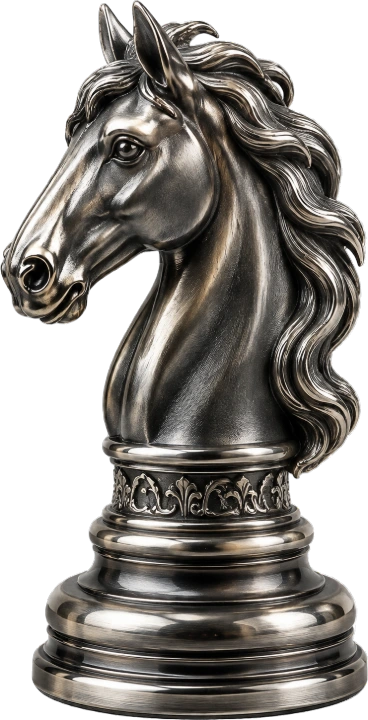
The only piece able to leap over friendly or enemy units. Moves in an L-shape: two squares orthogonally, then one square perpendicular. Supreme in closed, crowded positions.

Tactical power: Long-range skewers & pins
Moves any distance along open diagonals, permanently bound to the color square on which it began life. A pair of bishops working in tandem can dominate open vistas of the board.
Special ability: Castling with the King
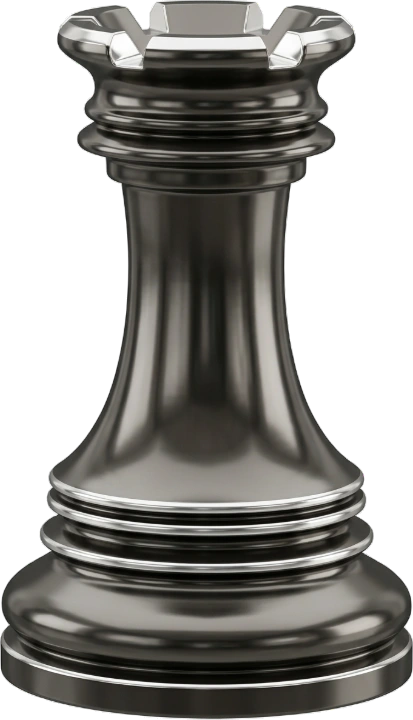
Moves any distance along horizontal ranks and vertical files. Heavy artillery that comes alive once the files are cleared of pawns. Deadly when invading the enemy’s seventh rank.
Golden rule: Never deploy too early
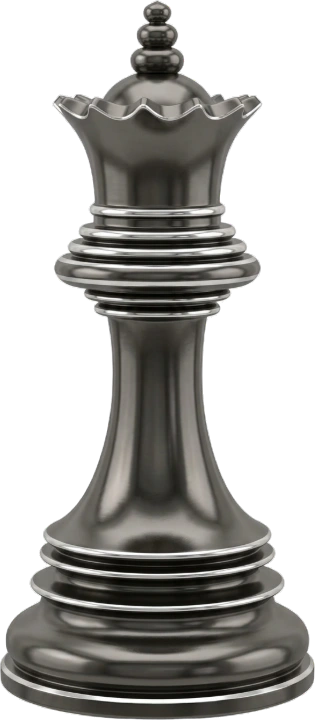
The lethal fusion of rook and bishop. Moves any number of squares in any direction — rank, file or diagonal. The most destructive attacking weapon on the sixty-four squares.
Supreme law: Checkmate ends the world
Moves one square in any direction and cannot step into attack. If trapped with no legal escape while attacked, the game ends in checkmate. In the endgame, the king transforms into an active fighter.
VI — The Three Phases of Play
A game of chess is three games in one, each with its own currency.
Forces gather, collide, and then dissolve. The player who understands which phase they are standing in usually wins it.
The first 10–15 moves. Focus purely on occupation of central squares, rapid mobilization of knights and bishops, and castling the king to safety before initiating combat.
Forces collide. Formulation of grand plans, pawn breaks, tactical combinations — pins, forks, skewers, sacrifices — and fighting for open files for your rooks.
Queens and major armies are traded off. The remaining pawns march toward promotion, and the once-sheltered king emerges from hiding to command the center.
VII — The Modern Game
From the first world championship to the engine age, chess has kept the same sixty-four squares.
The game did not stop in 1851. It became a sport with world champions, a Cold War stage, a laboratory for computer science, and a global online pastime.
The pieces have changed names, the queen has grown stronger, the analysis has moved from café tables to silicon — but the board is still sixty-four squares, and it is still waiting for your first move.
London hosts the first international chess tournament. Adolf Anderssen wins.
Wilhelm Steinitz defeats Johannes Zukertort in the first official world championship match.
Bobby Fischer defeats Boris Spassky in Reykjavík in one of the most watched matches of the Cold War.
IBM’s Deep Blue defeats Garry Kasparov in a six-game match, the first defeat of a reigning world champion by a computer under standard match conditions.
AlphaZero learns chess from self-play and defeats Stockfish in a 100-game match.
FIDE’s Laws of Chess take effect on 1 January, anchoring over-the-board play worldwide.
Sources & method
A short archive should be honest about what is documented and what is legend.
The rules and notation reference for this site.
The documentary record, disputed venue and date, and the later “Immortal” name.
The standard scholarly history of chess before the modern era.
A readable account of the 1851 game and its afterlife.
A playable score and move archive of the Immortal Game.
VIII — Challenge Me
The board is still waiting. Find me on Chess.com and send a challenge.